Digital Out-of-Home Steps to the Center of Omnichannel Media Strategy


Digital Out-of-Home (DOOH) advertising has reached a critical inflection point, stepping out from the shadows of legacy media planning to demand a central position in omnichannel marketing strategies. According to a report released by the Interactive Advertising Bureau (IAB) in October 2026 titled "Getting Digital Out-of-Home on the Media Plan," DOOH is rapidly shedding its reputation as a static, isolated channel and maturing into an automated, highly context-driven engine for modern commerce.
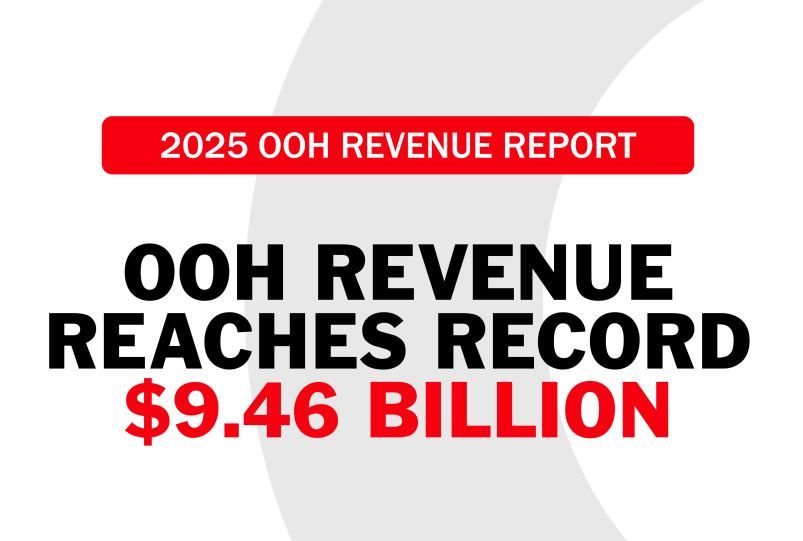
Data from the Out of Home Advertising Association of America (OAAA) underscores this momentum. U.S. OOH revenue hit a record $2.12 billion in the first quarter of 2026, marking 20 consecutive quarters of growth. DOOH represented 36% of total OOH revenue, surging 12.9% year-over-year. Industry forecasters at EMARKETER project total U.S. OOH ad spending to reach $11.5 billion in 2026 and expand to $13.3 billion by 2030.
The industry's expansion comes as brands re-evaluate heavy concentrations on personal and in-home screens. While mobile, social, and connected TV (CTV) channels remain saturated with high-frequency messaging, DOOH provides incremental reach by intercepting consumers during real-world activities such as commuting, traveling, and shopping.
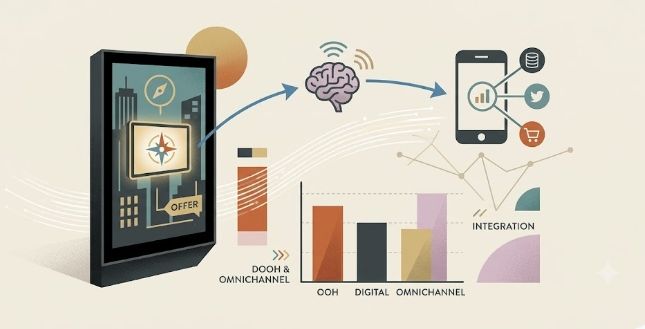
The retail sector exemplifies the growing disconnect between consumer spending habits and media allocations. Data from the U.S. Census Bureau indicates that e-commerce accounted for 17.1% of total U.S. retail sales in the second quarter of 2026, meaning nearly 83% of purchases still occur inside physical stores. Despite this, retail media investments remain overwhelmingly concentrated on digital, on-site formats.
Recent performance benchmarks highlight DOOH’s full-funnel efficiency. An analysis by OAAA and Kochava revealed that OOH campaigns delivered a median lift of 20% for in-person outcomes and 14% for digital outcomes—outperforming both CTV/streaming and broadcast television, which recorded median outcome lifts around 10%. Individual campaign results reinforce these findings: fast-food chain Jack in the Box generated 1.3 million store visits and an 8.8% lift in foot traffic, while beverage maker Heineken drove $3.8 million in incremental sales using targeted DOOH activations.
Retail giants are moving quickly to monetize physical storefronts. Walmart Connect has expanded its in-store offerings to nine discrete media products, and Kroger Precision Marketing continues to scale its in-store digital capabilities through its partnership with Barrows Connected Stores. Meanwhile, Target has incorporated near-store DOOH screens into its Roundel platform to enable closed-loop measurement. A 2026 study by Grocery TV showed that 62% of U.S. grocery shoppers made a purchase after seeing a product advertised on an in-store screen, with 37% citing the ads for helping them discover new items.
The acceleration of DOOH is largely powered by programmatic integration. Major demand-side platforms (DSPs) now allow media buyers to purchase DOOH inventory alongside mobile, web, and video campaigns using standardized OpenRTB specifications. According to data from Place Exchange, 96% of U.S. programmatic OOH spend in the first half of 2025 went through private deals, with custom private marketplaces (PMPs) accounting for 62% and always-on PMPs capturing 29%. The shift toward always-on PMPs signals rising buyer familiarity and confidence in programmatic physical screen inventory.
Industry leaders emphasize that maximizing DOOH requires treating physical context as an active element of creative execution. By combining real-time triggers—such as weather, traffic, and venue type—with automated programmatic buying, advertisers can deliver messages tailored directly to the consumer's environment. As media buyers seek alternatives to crowded digital auction environments, DOOH is establishing itself as an essential bridge between real-world consumer behavior and digital campaign objectives.
한국 최초 글로벌 옥외광고 뉴스레터
세계 옥외광고 뉴스를 편하게 이메일로 받아 보는 법!