Global Air Travel Enters New Growth Era as Passenger Traffic Set to Reach 23 Billion by 2054

Global air transport has officially moved beyond its post-pandemic recovery phase and entered a new era of long-term expansion, according to the latest Airports Council International (ACI) World Airport Traffic Forecasts 2025–2054 report.
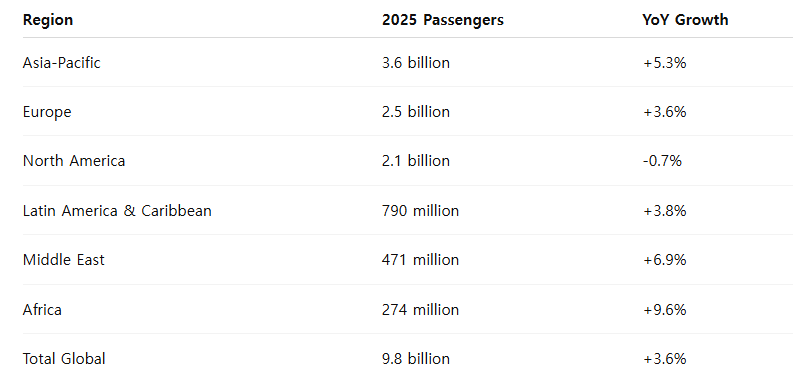
ACI forecasts that global passenger traffic will reach 9.8 billion passengers in 2025, up 3.6% year-on-year, before surpassing 10.2 billion passengers in 2026. The figures indicate that aviation demand has stabilized following the industry’s recovery from COVID-19 disruptions and is now being driven by structural growth factors rather than rebound effects.
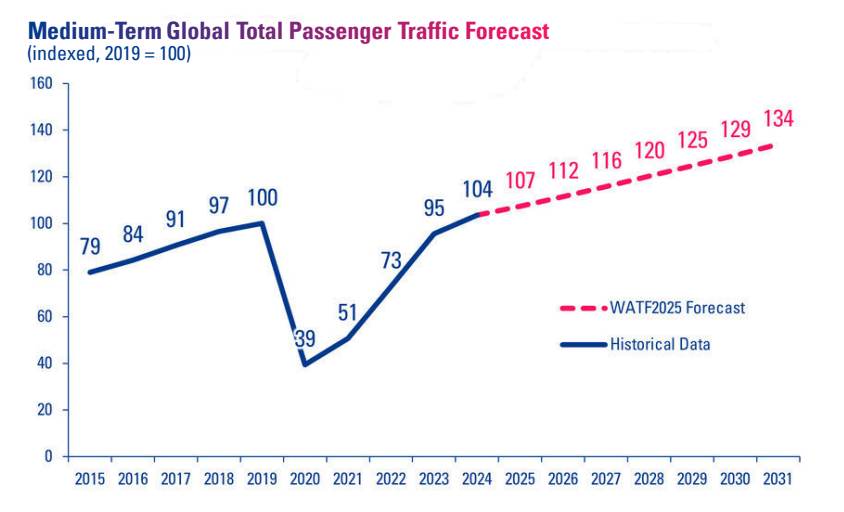
The report projects global passenger traffic to grow at a compound annual rate of 3% between 2024 and 2054, more than doubling by the mid-2040s and reaching 23.2 billion passengers by 2054. Asia-Pacific is expected to remain the dominant growth engine, handling approximately 10 billion passengers annually by 2054, followed by Europe with 5.1 billion and North America with 4.1 billion passengers.
ACI notes that the aviation landscape has fundamentally changed since the pandemic. Regional growth patterns are becoming increasingly uneven, with emerging and leisure-focused markets outperforming mature economies. International travel continues to strengthen, while domestic demand in some developed markets remains under pressure.
The organization also highlighted ongoing challenges, including geopolitical tensions, supply-chain constraints, aircraft delivery delays, and shifting trade policies. Despite these uncertainties, ACI expects long-term demand to remain resilient. Global air cargo volumes are forecast to double from current levels, reaching 262 million metric tonnes by 2054, supported by continued growth in e-commerce and supply-chain diversification.
For airports, the message is clear: future growth opportunities will increasingly depend on market-specific strategies, capacity planning, and the ability to adapt to a more complex and fragmented aviation environment.
한국 최초 글로벌 옥외광고 뉴스레터
세계 옥외광고 뉴스를 편하게 이메일로 받아 보는 법!