Seoul Incheon Reaches Global No. 1, Turning International Passenger Scale into Powerful Brand Visibility

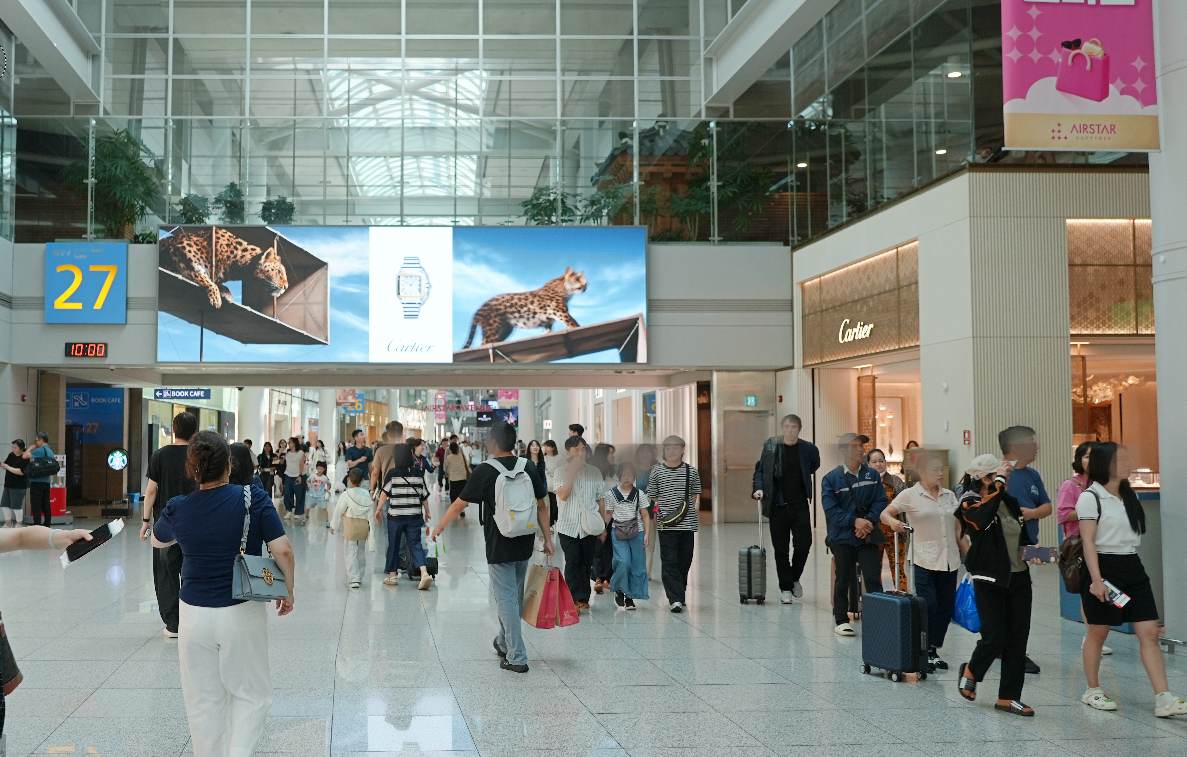
Seoul Incheon International Airport’s rise to the world’s No. 1 airport for international passenger traffic in the first half of 2026 is more than an aviation milestone. For the advertising industry, it also highlights the growing value of airports as global platforms connecting brands with international audiences.
According to Incheon International Airport Corporation, 38.39 million international passengers used the airport between January and June, up 6.3% from a year earlier. Incheon surpassed London Heathrow, with 37.79 million passengers, and Singapore Changi, with 34.53 million, among 1,234 airports tracked by Airports Council International (ACI).
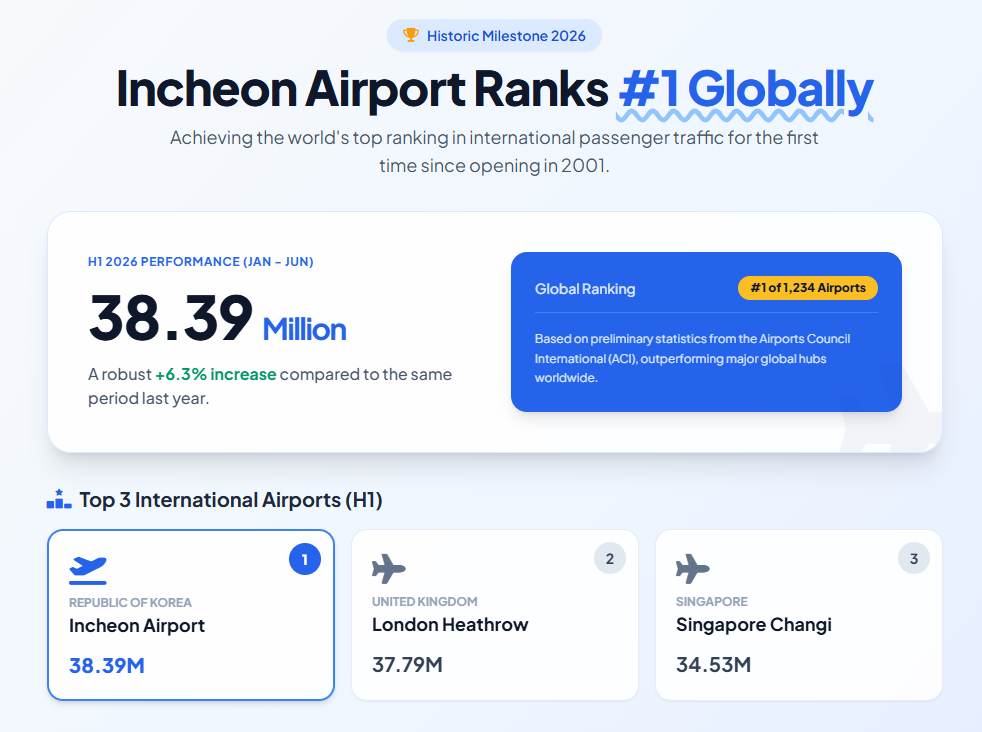
It marks the first time Incheon has reached the top position since opening in 2001.
The airport’s long-term rise is equally notable. Incheon ranked 10th globally in 2002, climbed to fifth in 2018 and third in 2024 before reaching No. 1 in the first half of 2026.
From an Out-of-Home (OOH) advertising perspective, that growth carries particular significance. Airports bring together large numbers of international travelers in an environment where people spend considerable time moving through check-in areas, security zones, duty-free stores, departure gates and baggage claim halls.
That makes passenger growth more than a traffic statistic. It expands the potential audience for brands using large-format digital screens and other airport advertising media.
The development also reflects a broader shift in OOH. The medium is increasingly being positioned as part of an omnichannel strategy connecting physical environments with digital, mobile, social media and Connected TV campaigns. Industry research has highlighted OOH’s role as an amplifier within the wider media mix, particularly as digital screens allow campaigns to respond more quickly to audience and market conditions.

Incheon’s scale therefore creates an increasingly valuable communications environment for global brands. Travelers arriving in Korea encounter advertising alongside retail, architecture, digital information and other elements of the airport experience, while departing passengers provide brands with another opportunity to reach audiences immediately before they travel overseas.
Incheon is no longer simply competing as a transportation hub. With international passenger traffic reaching the highest level among the airports measured, it is becoming one of the world’s largest physical stages for global mobility, consumer experience and brand visibility.
한국 최초 글로벌 옥외광고 뉴스레터
세계 옥외광고 뉴스를 편하게 이메일로 받아 보는 법!