Station Seats in South Korea Become a Public Service to Help Older Travellers Bridge the Digital Divide
South Korea’s Gwangmyeong Station turned waiting-room seats into meeting points for older travellers seeking help with online train reservations.

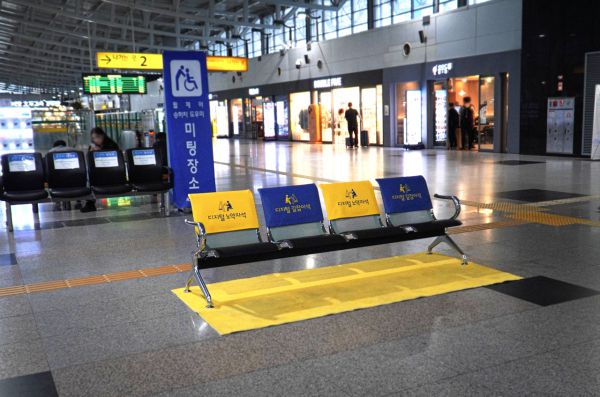
A student-led campaign at South Korea’s Gwangmyeong Station turned waiting-room seats into meeting points for older travellers seeking help with online train reservations. Using two colours to connect people who needed assistance with passengers willing to provide it, the initiative brought a practical response to digital exclusion into a familiar public space.
According to MADTimes, an online publication covering advertising and marketing, the campaign took place on September 22 ahead of the Chuseok holiday, with support from the station. It was developed by Kang Woo-seok, Kang Ji-won, Lee Su-jin and Cha Hae-na, students at the academy run by public-interest advertising agency Dminusone.
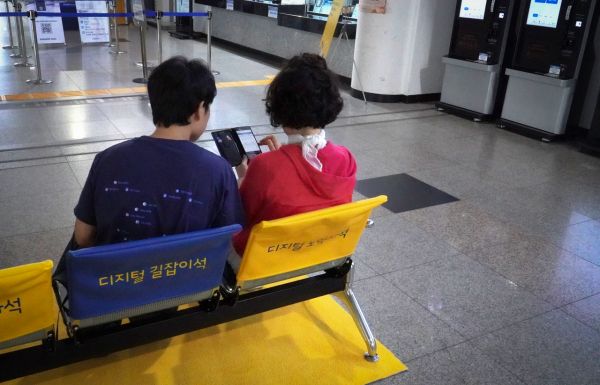
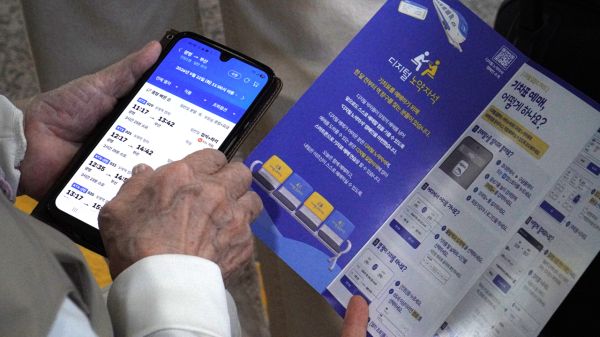
The idea emerged from visits to the station, where the students found older travellers going to ticket counters a month before their journeys because they were unfamiliar with online reservations. Rather than simply helping them purchase a ticket, the students designed an opportunity to practise smartphone booking skills they could later use at home.
The campaign’s main communication device was the seating itself. Yellow seats identified older passengers looking for digital assistance, while blue seats identified volunteers ready to help. The colour system made both groups visible to each other, providing a straightforward way to start a conversation that might otherwise never happen.
Potential helpers were already nearby: passengers who had completed their own reservations and were waiting for trains. With guidance from campaign staff and a printed instruction booklet, participating volunteers explained the booking process. Older travellers then used their own smartphones to practise the steps, making the exchange a hands-on learning experience.
MADTimes reported positive responses from participants, including an 81-year-old who received help with registration and ticket purchasing. Social media comments cited in the report also expressed interest in helping older passengers, although the article did not provide participation totals or evidence of longer-term improvements in booking skills.
The initiative addressed a wider gap in digital capability. MADTimes cited the National Information Society Agency’s 2025 digital divide survey, which put the digital skills level of adults aged 55 and older at 56.2% of the general population’s level. For those aged 70 and above, the figure was 29.4%. These are comparative capability measures, rather than the percentages of people able to book tickets online.
For out-of-home advertising professionals, the campaign illustrates how physical design can support a public-service message through immediate participation. Its strength lay in linking a visible signal, a relevant location and a useful action: a seat indicated a need, and the person beside it could respond.
The one-day project offers a small-scale example of how public spaces can support digital inclusion. Whether the approach could become a regular service would require further implementation and assessment, but its mechanism was clear: make asking for help easier, and give willing strangers a simple way to offer it.
한국 최초 글로벌 옥외광고 뉴스레터
세계 옥외광고 뉴스를 편하게 이메일로 받아 보는 법!